Home › bathroom color schemes
19 Bathroom Color Schemes That Make Small Bathrooms Feel Like a Spa
Paint pairings, tile, and renter-safe color moves for bathrooms of any size.
The best bathroom color schemes use three elements: a light wall color that bounces the room's limited light, one mid-tone color on the vanity or tile, and a single metal finish throughout. Warm white with soft sage and brushed nickel suits most small bathrooms; navy or charcoal works only with warm, layered lighting. Renters can get the same effect with peel-and-stick tile, a new shower curtain, and matching towels.
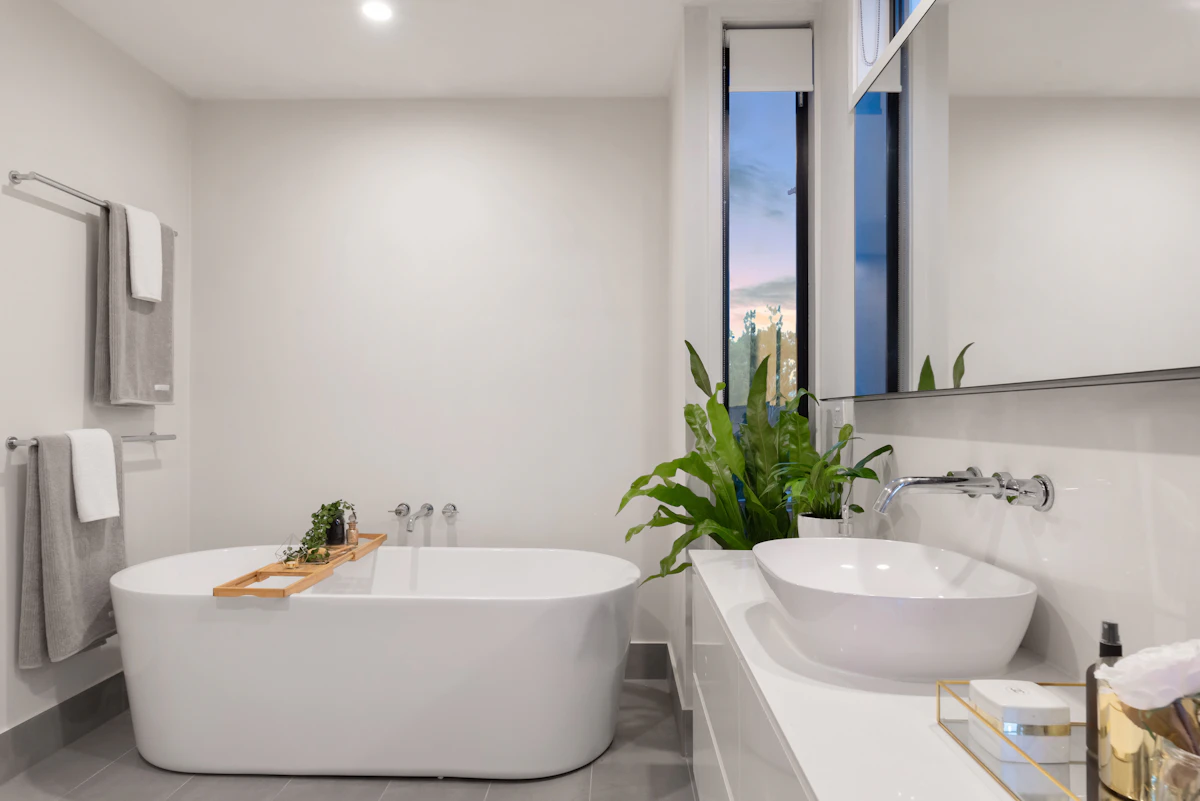
Photo: Unsplash
Bathrooms are the smallest rooms with the most hard surfaces, so color behaves differently there. A color that looks calm on a bedroom wall can look cold under bathroom lighting, and a dark tile that looks rich in a showroom can swallow a windowless bathroom whole.
The schemes below are built for real bathrooms: small, humid, lit by one fixture, and usually rented. Each one names the wall color, the vanity or tile color, and the metal finish, because a scheme without a finish plan is just a paint chip.
Warm white + soft sage + brushed nickel
The safest small-bathroom scheme, and the one designers reach for first. Warm white walls keep the room bright, a soft sage vanity adds color without weight, and brushed nickel fixtures stay quiet across every surface.
Pair it with light wood accents — a teak bath mat, a wood-framed mirror — and white towels. The green reads as calm, not as a theme, and it flatters most skin tones in the mirror.
Pale blue + white + chrome
A coastal classic that works because blue recedes visually. Pale blue walls with white wainscoting or tile and chrome fixtures make a small bathroom feel cleaner and slightly larger.
Keep the blue pale — a mid-tone blue in a small bathroom reads as cold under artificial light. If the room has no window, warm the lighting to 2700K so the blue does not go icy.
Blush + warm wood + matte black
Blush is the warmest way to add color to a bathroom without committing to pink. A blush wall or blush tile with a light wood vanity and matte black fixtures feels modern and soft at once.
Use blush on one surface only — walls or tile, not both. The tall wood cabinet in the photo shows the balance: warm wood storage against a blush wall, with the floor left light.
Charcoal + white + brass (only with good light)
A dark bathroom is a mood, and it works when the lighting is deliberate. Charcoal walls with a white vanity top, brass fixtures, and two sconces at face height create a spa feeling that a single overhead bulb cannot.
Never pair dark walls with a single cool ceiling light. The room will look like a cave. If the bathroom has no window, add a lighted mirror and keep the ceiling white.
Navy vanity + white tile + nickel
Put the dark color on the vanity, not the walls. A navy vanity against white subway tile and warm white walls gives the bathroom a focal point without shrinking it, and the vanity is the one surface you can repaint or replace cheaply.
Repeat the navy once, in a hand towel or a small stool, so it reads as intentional. A single dark object in a light room looks like a mistake; a repeated one looks like a scheme.
Renter-safe color without paint
Peel-and-stick tile on one wall, a shower curtain in the scheme's main color, matching towels, and a painted (removable) mirror frame deliver 80 percent of a color scheme with zero paint. The shower curtain is the largest color surface in most bathrooms — treat it as the accent wall.
Check that peel-and-stick products are rated for humidity and never apply them inside the shower. Vent the fan during every shower, and the adhesive will hold for the length of a lease.
Mistakes to avoid
- Choosing a wall color under store lighting — always test a swatch in the bathroom's actual light, day and night.
- Mixing chrome, nickel, and brass in one bathroom.
- Using a small busy tile pattern on both floor and walls.
- Painting a windowless bathroom dark with only one overhead light.
- Forgetting the ceiling — a stained or yellowed ceiling undoes any color scheme.
Frequently asked questions
What is the best color scheme for a small bathroom?
Warm white walls, a soft sage or pale blue vanity, and matte black or brushed nickel fixtures. Light colors bounce the small room's limited light; the vanity carries the color so the walls stay bright.
Can a small bathroom be dark and moody?
Yes, with limits. A dark moody bathroom works when the lighting is warm and layered — sconces at face height, not a single overhead light. Keep the ceiling and at least one wall light, and use large-format tile to reduce grout lines.
How can renters add color to a bathroom without paint?
Peel-and-stick tile, removable wallpaper rated for humidity, a new shower curtain, and matching towels. Never use standard removable wallpaper inside a shower area, and always vent the fan during and after showers.
How many colors should a bathroom color scheme have?
Three: a wall color, a vanity or tile color, and a metal finish. Adding a fourth — a patterned floor, a bold curtain, and a colored vanity at once — makes a small bathroom feel chaotic instead of designed.
Related guides

21 Renter Friendly Decor Ideas That Leave Zero Damage
Damage-free decorating that landlords approve and deposits survive.

Budget Room Makeover: Transform Any Room for $100, $300, or $500
A room-by-room makeover plan at $100, $300, and $500 — no paint, no contractor.

24 Small Space Storage Ideas That Hide Clutter in Plain Sight
Vertical storage, hidden storage, and door storage for apartments with no closets.